What exactly does query fan-out do?
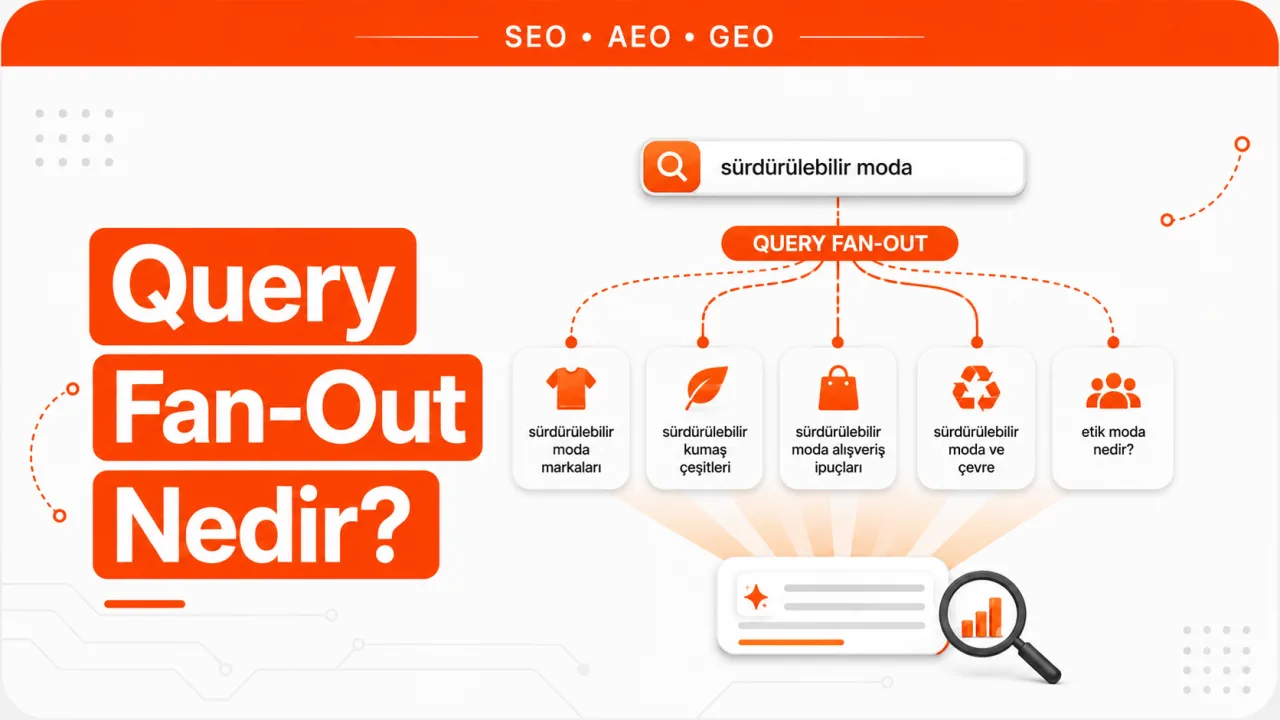
Query fan-out is when a search system breaks a single question from the user into subtopics and runs a separate search for each one. Google's own documentation describes this explicitly. Both AI Overviews and AI Mode may run multiple related searches across subtopics and different data sources while generating an answer. There is one question on the screen; in the background, a set of searches runs, one for each part of that question.
The distinction here is usually overlooked. Fan-out is not a ranking factor; it is an information retrieval technique. It does not add points to a page; it changes which questions the page is compared against. In classic search, the page competes for the phrase the user typed. Under fan-out logic, the page competes for sub-questions derived from that phrase that the user never typed. This single mechanism underlies most of what is discussed today under the heading of generative engine optimization.
The example Google gave in its announcement shows the difference well. For a user asking about the differences in sleep tracking between a smart ring, a smartwatch and a sleep tracking mat, a single list of results is not enough. The system splits the question into device families, measured metrics and comparison criteria, searches them, gathers the results and combines them into a single answer. The user typed one question; the system ran multiple searches.
How does a single query turn into multiple searches?
The process runs in this order.
- The question is analyzed, and the separate information needs within it are split into subtopics.
- A separate search query is generated for each subtopic. Google describes this as issuing many queries simultaneously on the user's behalf.
- Each query retrieves its own set of candidate documents. A page that is strong for one sub-query may not appear at all for another.
- These sets merge into a single candidate pool, and the information that goes into the answer is selected from this combined pool.
- The links shown next to the answer come from the same pool. Google says that while generating an answer, the models identify more supporting pages, which allows them to show a broader and more diverse set of links than classic search.
A Google patent application on conversational search complements this description. In the model described in the application, a language model processes the user's query and context information to generate additional queries. These can be rewritten versions of the query, complementary queries or queries that go deeper into the topic. Documents that answer both the original query and these additional queries are then gathered into a single result set. A patent application is not proof that the production system works exactly this way, but it points in the same direction as the official statements.
The scale of the technique is not fixed. Google states that its deep research mode takes the same fan-out approach further and can run hundreds of searches. The emphasis in model-side updates has also been on running more searches to find content that was previously missed. The direction is clear: the number of searches run per question is increasing.
How is it different from classic search?
| Dimension | Classic search | Fan-out logic |
|---|---|---|
| Number of queries run | The single query the user typed | Many sub-queries derived from the question |
| Unit of competition | The page's ranking for the query | How many sub-query pools the page gets into |
| Source selection | A single results list | A shared pool where multiple lists merge |
| Content advantage | A page focused on a single phrase | A page that answers the topic's sub-questions |
| Measurement | Rankings can be tracked per query | Sub-queries are not reported; results are read indirectly |
The eligibility side does not change. If a page cannot be crawled and indexed, it cannot get into the pool of any sub-query. The conditions for being shown as a source in AI answers are the same gates as in classic search. Google states plainly that there are no additional technical requirements for these features and that you do not need to create a new machine-readable file, an AI text file or special markup.
What changes on the content side?
The gap in a page built around a single keyword
When a page is built around a single phrase, it usually covers the sub-questions surrounding that phrase only superficially. Under fan-out logic, this page enters only the pool of the sub-query that corresponds to its own phrase. Other sites are selected for the other sub-queries, and the body of the answer is largely built from them. The page may technically be "ranking", but its contribution to the answer is limited to a single piece.
The same problem appears in content clusters with too narrow a scope. When a topic is split into ten separate thin pages, each page answers only one sub-query and none of them carries the whole topic. Fan-out coverage should not be confused with producing superficial long-tail pages. The system does not count pages; it draws on the quality of the answers to each part of a question.
Why does a page that answers the sub-questions pull ahead?
A page that genuinely covers a topic's definition, how it works, its limits, how it compares and typical failure scenarios can get into the pools of several sub-queries derived from the same question at the same time. This increases the likelihood of being a source at more than one point in the same answer.
In practice, this comes down to section design. Each section should have a single, clear information task and should be able to carry its own claim even when taken out of context. Sub-queries select not the whole page but a usable piece within it. If sections only make sense by leaning on one another, a piece taken on its own will be incomplete. Defining terms clearly where they first appear helps for the same reason; for corporate content, keeping a shared AI and SEO glossary pulls scattered definitions together.
Why do unfamiliar queries show up in Search Console?
What appears in the query list?
More and more strange phrases are accumulating in the query list of the performance report: long questions written as full sentences, fragments of conversation, even short replies that seem meaningless on their own. These are not random; they are the result of documented behavior.
Google says that a follow-up question asked in AI Mode is actually a new query. All the impression, position and click data in the new answer is recorded against this new user query. So when a user first asks a normal question and then continues the conversation, the follow-up sentence also lands in the query list. A phrase written in conversational language looks out of place in the report, because it appears in a form nobody would type into a search box.
The second source is the question itself. Questions typed into AI interfaces are noticeably longer than those typed into a classic search box. Even though your page answers only one sub-query of that long question, you see the full question the user typed in the report. The page collects impressions from a sentence it never targeted, because what gets into the pool is not the page's target keyword but the answer it gives to the sub-query.
How should these queries be read?
First, you need to know the limit. Google does not publish fan-out sub-queries. The separate performance report for AI features groups data by page, country, device and date and does not provide a query dimension. Search Console is therefore not a fan-out log and will not become one. The sub-query lists produced by fan-out tools on the market are not Google's real sub-queries either, but simulations generated with their own models. They can be useful for generating ideas, but they are not a substitute for measurement.
The right reading is this: these phrases are not keyword targets but topic gap signals. If a recurring aspect of the same concept emerges among the strange queries, that aspect is missing from your existing page. The job is not to open a new page for each phrase but to build a section on the relevant page that genuinely answers that sub-question. On the click side, knowing that external link clicks inside AI Mode count as normal clicks and that position is calculated the same way as on a classic results page keeps you from interpreting the data as something it is not.
Common mistakes when reading fan-out
- Treating the number of sub-queries as if it were exact. Google does not disclose how many queries it runs per question. Official statements stay at the level of many simultaneous queries and hundreds of searches in deep research. The fixed figures in circulation are third-party estimates.
- Producing a separate thin page for each sub-query. This produces cannibalization instead of coverage and never gives any page enough strength to carry the whole topic.
- Turning headings into artificial question patterns. The question format works if users really ask that way. Forced question headings do not meet the information need; they only imitate the format.
- Looking at a single metric. A page may be cited, but the brand name may not appear in the answer. The brand name may appear, but no link may be given. These are measured separately, which is why AI visibility measurement cannot be reduced to a single report row.
- Skipping eligibility. Tags that restrict previews and crawl blocks keep the page out of the pool, no matter how good the content is.
Frequently Asked Questions
How many sub-queries does Google split a question into?
Google has not published this number. The wording in official statements is many simultaneous queries and, in deep research mode, hundreds of searches. The number varies with the complexity of the question; there is no fixed threshold.
Can I see fan-out sub-queries with a tool?
You cannot see the real sub-queries. Google does not report them, and the performance report for AI features has no query dimension. The lists that tools produce are estimates made with their own models, not the queries Google runs.
Does fan-out require a separate technical file or markup?
No. Google states that there are no additional requirements to appear in these features and that you do not need to create a new machine-readable file, an AI text file or special markup. The controls available to the site owner are the same as in classic search.
Is optimizing for a single keyword completely over?
It is not over, but it is not enough on its own. Getting the page indexed and making it eligible for previews are still classic search tasks, and without them the page does not get into any sub-query pool. What has changed is the unit of competition. A page built around a single phrase answers one sub-query, while a page that answers a topic's sub-questions can be a source at several points in the same answer.