A Knowledge Graph identity means a brand is recognized as a unique entity in Google's structured knowledge database and receives a persistent, machine-readable identifier (Machine ID). A brand defined as an entity in the Knowledge Graph can earn a Knowledge Panel on searches for its own name, and it becomes easier for LLM-based answer engines to recognize the brand correctly. This identity is the foundational recognition layer through which a digital presence tells algorithms, "I exist and I'm a trustworthy source."
The Technical Foundations of the Knowledge Graph
The Google Knowledge Graph is a vast semantic database that models the world's entities (people, brands, places, concepts) and the relationships between them. Each entity is identified by a unique Knowledge Graph ID (KGMID). This ID is an alphanumeric string beginning with the prefix /m/ or /g/. For example, a brand's KGMID might take the form /g/11b7_x3r9t.
This identity system lets Google interpret a search query beyond simple text matching. When a user types "Apple," Google may read the query as a fruit, a technology company or a record label. The Knowledge Graph ID uniquely distinguishes each "Apple" entity and serves the right Knowledge Panel. So when a brand has its own ID in the Knowledge Graph, algorithmic ambiguity disappears and brand queries return the right information.
What Being Recognized as an Entity Means Algorithmically
When Google recognizes a brand as an entity, all the web signals related to that brand converge on a single node. The brand's website, social media profiles, news citations, Wikipedia page and mentions on third-party platforms become signal sources connected to the Knowledge Graph node. This convergence consolidates the brand's total digital authority under a single entity score.
Without entity recognition, these signals stay scattered. When Google sees the same brand name on different web pages, it can't always correctly associate them with the same entity. A Knowledge Graph identity removes this ambiguity. So entity status isn't just about earning a Knowledge Panel; it's about algorithmically consolidating and strengthening the brand's entire digital footprint.
The Knowledge Panel and SERP Visibility
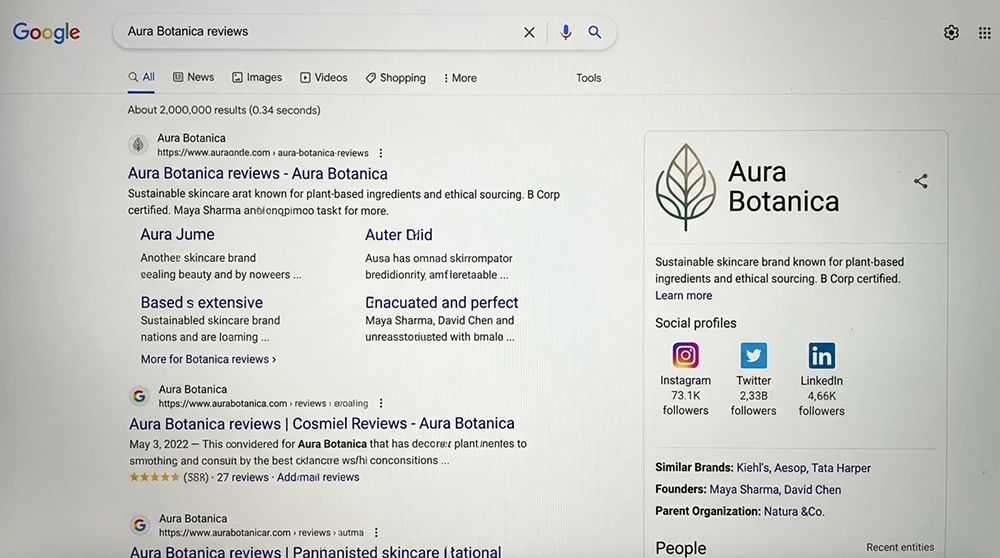
The Knowledge Panel is the structured information box that appears on the right side (desktop) or at the top (mobile) of Google search results. This panel shows the brand's logo, a short description, founding date, social media profiles, website and related entities. The panel is displayed only for entities defined in the Knowledge Graph.
Earning a Knowledge Panel means taking control of a large part of the SERP for branded searches. The panel occupies additional visual space alongside the organic results and gives users instant access to basic information about the brand. The panel's effect on click-through rate varies from brand to brand, and there is no reliable measurement that generalizes it; the certain gain is stronger perceived credibility and a brand users recognize at a glance.
Google Business Profile and Building a Local Entity
Google Business Profile (GBP) is the most direct way for local businesses to create an entity in the Knowledge Graph. When you create a GBP listing, Google adds the business to the local Knowledge Graph and assigns it an entity ID. Beyond providing visibility on Google Maps and in local search results, this listing is the foundational step that establishes the brand's entity status.
Completing the GBP profile in full is critical. Business name, address and phone (NAP), opening hours, category, website and photos should be entered fully and consistently. Consistency between this information and other sources across the web (directories, social media, the corporate site) strengthens Google's entity verification. NAP inconsistency prevents Google from connecting information from different sources to the same entity and stops the Knowledge Panel from forming.
The Entity Impact of Wikipedia and Wikidata Integration
Wikipedia is one of the Google Knowledge Graph's strongest signal sources. Having a Wikipedia page all but guarantees a brand's entity status. However, Wikipedia refuses to create pages for brands that don't meet its "notability" criteria. These criteria require significant coverage of the brand in independent, reliable sources.
Wikidata, on the other hand, is a structured data repository independent of Wikipedia and one of the sources that feeds the Knowledge Graph directly. The bar for creating an entity on Wikidata is lower than on Wikipedia. By creating an item for the brand on Wikidata, you can enter structured data such as the brand's name, type (Q4830453: business), official website, social media profiles and founding date. This entry directly feeds Google's entity recognition process.
Sending an Entity Signal With Schema.org Organization Markup
Implementing Organization schema in JSON-LD format on your website presents the brand's structured information directly to Google. This markup declares the brand's name, logo, contact details, social media profiles and corporate identity in a machine-readable format:
{
  "@context": "https://schema.org",
  "@type": "Organization",
  "name": "Brand Name",
  "url": "https://www.example.com",
  "logo": "https://www.example.com/logo.png",
  "foundingDate": "2015",
  "description": "Brand description",
  "sameAs": [
    "https://www.linkedin.com/company/brandname",
    "https://twitter.com/brandname",
    "https://www.instagram.com/brandname",
    "https://www.youtube.com/@brandname",
    "https://en.wikipedia.org/wiki/Brand_Name",
    "https://www.wikidata.org/wiki/Q123456789"
  ],
  "contactPoint": {
    "@type": "ContactPoint",
    "telephone": "+90-XXX-XXX-XXXX",
    "contactType": "customer service",
    "availableLanguage": "Turkish"
  }
}
The sameAs array links the Knowledge Graph entity to its related profiles. Including Wikipedia and Wikidata URLs in this array strongly supports entity verification. Each URL in the sameAs array connects a piece of the brand's digital identity to the Knowledge Graph node. Missing or incorrect URLs weaken the entity association.
The sameAs Property and Unifying Identity Across Platforms
The sameAs property tells Google that brand profiles on different platforms belong to the same entity. This declaration lets Google merge brand mentions from different sources into a single entity node. A LinkedIn company page, Twitter profile, Instagram account, YouTube channel and Crunchbase profile are each one facet of the brand's digital identity.
Choosing which URLs to add to the sameAs array is a strategic decision. Include only official, active profiles. Abandoned or outdated profiles weaken the entity signal. Make sure profile URLs follow a consistent format: https://www.linkedin.com/company/brandname is the correct format, while https://linkedin.com/in/personal-profile points to an individual profile instead of a company page and sends the wrong signal.
Brand SERP Optimization and Entity Control
The brand SERP (branded search results) is the full set of results Google shows when a user searches for the brand name. The Knowledge Panel is part of this SERP, but not all of it. Organic results, image results, news results, the Twitter box and PAA (People Also Ask) questions also make up the brand SERP. Entity control aims to ensure the brand is represented accurately and positively across all of these results.
To control the brand SERP, all the main pages of the brand's official website (about, products, contact) need to be indexed, active social media profiles need to appear in the SERP and negative content needs to be pushed down in the organic results. This isn't just SEO; it's the technical side of digital reputation management.
Brand Mentions (Unlinked Mentions) and Entity Strengthening
When evaluating an entity, Google considers how often, and in what contexts, a brand is mentioned across the web. These mentions don't need to include a link. Even a plain-text mention of the brand name sends a signal that strengthens entity recognition. This concept is called an "implied link" or "unlinked mention."
You can track brand mentions with tools such as Google Alerts, Mention or Brand24. These tools report where and how the brand is mentioned across the web. The context of a mention matters: mentions in authoritative sources (news sites, industry publications, academic sources) produce a much stronger entity signal than mentions in low-authority forums. That is why brands that are named regularly in high-authority sources, even without a link, are recognized more easily by the Knowledge Graph.
The Corporate About Page as the Entity's Introduction Hub
The "About" page on a website is the primary source where Google verifies entity information. This page should include the brand's founding date, field of activity, team structure, contact information and mission. Implementing Organization schema on this page and keeping it prominent in the internal linking structure strengthens the entity signal.
The About page should be designed not only for user experience but also with entity recognition algorithms in mind. When the brand name, founding year and field of activity appear in the page's first paragraph, they serve as a source for the short description in the Knowledge Panel. Beyond being visually appealing, the page should present information in a structured, easily machine-readable format.
Digital PR and Entity Confirmation in Authoritative Sources
Knowledge Graph entity status is confirmed not only by the information on the brand's own website but also by citations in authoritative third-party sources. Interviews in industry publications, press releases on news sites, academic citations and mentions in industry reports are external signals that feed Google's entity verification process.
A digital PR strategy aims to build these citations in a planned way. Activities such as distributing press releases, speaking at industry events, publishing research reports and appearing as a podcast guest generate brand mentions in authoritative sources. Every mention is a confirmation signal added to the Knowledge Graph node. Together, these signals directly determine how durable the entity status is and how rich the Knowledge Panel becomes.
The Knowledge Panel Claim Process
For certain entities, Google grants management rights over the Knowledge Panel to the relevant brand representative. This process starts with the "Claim this knowledge panel" link shown in the Knowledge Panel. Once the claim is approved, you gain the right to directly edit the information on the panel (description, logo, social profiles) and to suggest updates.
During the claim process, Google verifies that the applicant is authorized to represent the brand. Verification happens through the brand's official website, Search Console access or official social media accounts. Once the claim is approved, you can use the "Suggest edits" option to fix any errors or gaps in the panel information. Google reviews these suggestions and applies them if it finds them appropriate.
How Structured Data Layers Strengthen the Entity
Beyond Organization schema, the schema types used on other pages of the site expand the entity's network of relationships. The author and publisher fields in BlogPosting schema, the isPartOf relationship in Article schema and the mainEntity reference in FAQPage schema connect all content to the main Organization entity.
{
  "@context": "https://schema.org",
  "@type": "BlogPosting",
  "headline": "Article Headline",
  "author": {
    "@type": "Person",
    "name": "Author Name",
    "url": "https://www.example.com/author/author-name"
  },
  "publisher": {
    "@type": "Organization",
    "name": "Brand Name",
    "logo": {
      "@type": "ImageObject",
      "url": "https://www.example.com/logo.png"
    }
  }
}
This nested structure connects the "Author Name" entity to the "Brand Name" entity and positions every blog post as part of the brand's content presence. The richer the entity's relationship network, the stronger and more connected its node in the Knowledge Graph becomes.
E-E-A-T Signals and the Entity Trust Score
Google's E-E-A-T (Experience, Expertise, Authoritativeness, Trustworthiness) framework directly affects how an entity's trustworthiness is assessed. The fact that a brand exists as an entity in the Knowledge Graph doesn't make it trustworthy. Trustworthiness is determined by the quality of the signals tied to the entity (author bios, expert citations, third-party verifications).
For sites in the YMYL (Your Money or Your Life) category, combining E-E-A-T signals with the entity is especially critical. The Knowledge Graph identity of brands operating in health, finance and law should be backed by proof of expertise. Academic background and certifications in author bios, company history and industry awards on the about page, and expert citations in external sources are the concrete signals that provide this backing.
Entity Recognition in LLM-Based Answer Engines
LLM-based answer engines such as ChatGPT, Perplexity and Gemini use entity recognition as one of their evaluation criteria when selecting sources. Content belonging to an entity defined in the Knowledge Graph receives a higher trust score than an unrecognized source and is more likely to be cited.
This relationship forms the entity dimension of a GEO (Generative Engine Optimization) strategy. LLMs perform entity-based information extraction when generating answers. If a brand is recognized as an entity, the content it produces is positioned as a source in the LLM's knowledge graph. In the LLM era, a Knowledge Graph identity is a brand's passport to algorithmic trust. Without this passport, brand content remains an anonymous source in LLM answers or isn't cited at all.
Managing Multiple Entities: The Parent Brand and Its Sub-Brands
In corporate structures with multiple products, services or sub-brands, each entity needs to be defined separately in the Knowledge Graph and associated with the parent brand. While the parent brand is defined as an "Organization," sub-brands can be defined as "Brand" or separate "Organization" entities. This relationship is declared with the parentOrganization and subOrganization properties in schema.org:
{
  "@context": "https://schema.org",
  "@type": "Organization",
  "name": "Sub-Brand Name",
  "parentOrganization": {
    "@type": "Organization",
    "name": "Parent Brand Name",
    "url": "https://www.parentbrand.com"
  }
}
This structure lets the sub-brand exist as an entity independent of the parent brand in the Knowledge Graph, while also declaring the hierarchical relationship between the two entities. The parent brand's authority is partly passed on to the sub-brand through this relationship.
Entity Disambiguation and the Same-Name Brand Problem
Different brands or entities sharing the same name create a disambiguation problem in the Knowledge Graph. The word "Atlas" could be a collection of maps, a mythological figure, a software company or a sports club. Google evaluates the entity's contextual signals to resolve this ambiguity.
An effective way to strengthen disambiguation is to pair the brand name with its field of activity wherever it appears. A phrase like "Brand Name technical SEO consulting" clarifies the entity's context. The description field in schema markup, the description on Wikidata and the first paragraph on Wikipedia are the primary sources of disambiguation signals. Giving a consistent, clear definition across all of these sources helps Google match the right entity with the right queries.
The Weight of Social Profiles in Entity Verification
Active, verified social media profiles are a strong source of signals for entity verification. A LinkedIn company page, a Twitter/X blue check badge, a YouTube channel and an Instagram professional account are profiles that have gone through the platforms' own verification processes. These verifications confirm to Google that the brand is a real, active entity.
The follower count of social media profiles doesn't directly affect entity recognition. What matters is whether the profile exists, whether it is verified, how regularly it publishes content and whether its NAP information matches the website. An active, consistent LinkedIn company page with 500 followers produces a stronger entity signal than a page with 50,000 followers that hasn't been updated in two years.
Checklist for Earning a Knowledge Graph Identity
Earning entity status is a systematic process. The checkpoints below are the core steps toward a Knowledge Graph identity:
- Implement Organization schema with a sameAs array: Define Organization markup in JSON-LD format on the website's homepage and add all official profile URLs to the sameAs array.
- Complete your Google Business Profile listing in full: Enter NAP information, opening hours, category and images fully and accurately.
- Create an entity item on Wikidata: Enter the brand's name, type, website, founding date and social profile links on Wikidata.
- Ensure NAP consistency across all platforms: Verify that the business name, address and phone number are identical on the website, GBP, social media and directories.
- Generate brand mentions in authoritative sources: Build brand citations in industry publications, news sites and industry reports through planned digital PR activities.
- Claim your Knowledge Panel: Once the panel appears, claim management rights so you can keep its information accurate.
Entity Monitoring and Sustainable Identity Management
Here's the point that looks right in theory but blows up in practice: many assume a Knowledge Graph identity is permanent once earned, but when entity information goes out of date or signals weaken, the Knowledge Panel can disappear. A brand name change, a move to a new address, closed social profiles or changes to the website's structure all disrupt entity signals.
To keep the entity identity sustainable, set up three layers of monitoring. The first is a monthly Google search for the brand name to check whether the Knowledge Panel appears and whether its information is accurate. The second is tracking brand mentions with Google Alerts to detect negative or incorrect citations. The third is periodically verifying the technical validity of the schema markup with Google's Rich Results Test. When these three layers work together, the Knowledge Graph identity remains a lasting source of algorithmic trust.