What is a backlink?
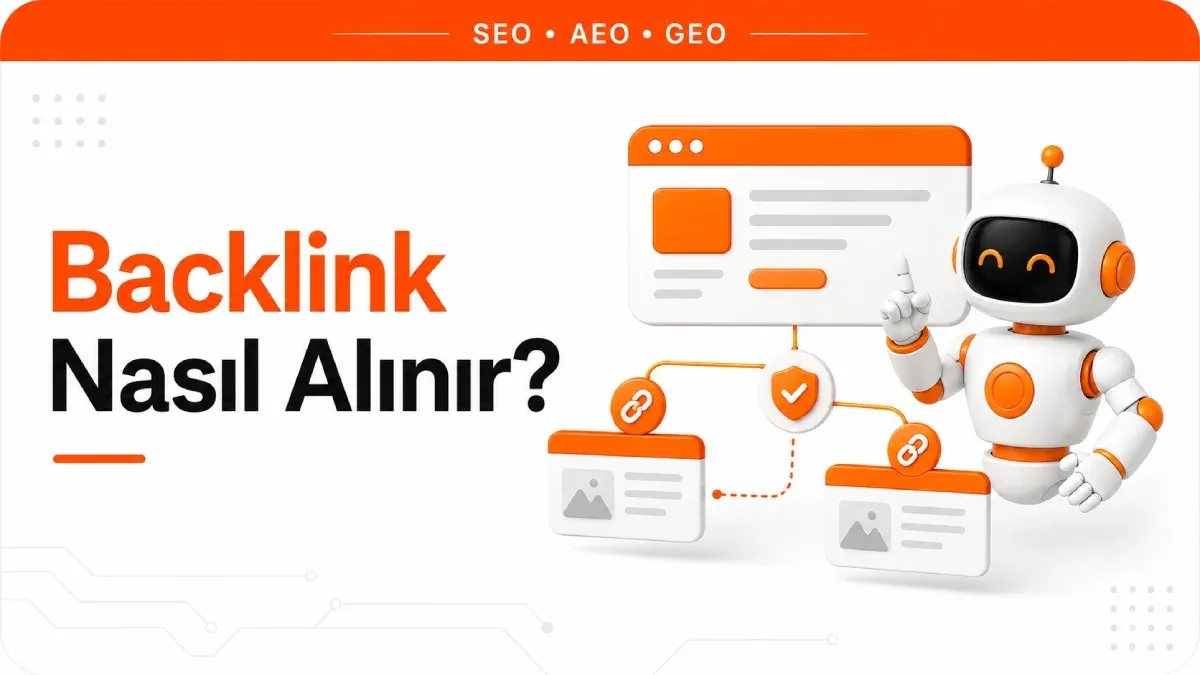
A backlink is a link from one website to another. Google's PageRank algorithm, published in 1998, models links as votes of trust between sites; every link a page receives from strong sources increases that page's authority signal. Whether a link carries a ranking signal is determined by its rel value: an unmarked link passes signal, rel="sponsored" declares a paid or advertising relationship, rel="ugc" a user-generated area, and rel="nofollow" a general reservation. What the industry calls "dofollow" is not a separate tag but simply a link that carries no annotation.
A link's value depends on its source. Google released the Penguin update, which targeted low-quality link profiles, in 2012; after that, the quality of the source rather than the number of links became decisive. The types of backlinks and the technical details are covered in our what is a backlink guide; this article focuses on acquisition methods and the process.
What preparation comes before building backlinks?
Backlink work starts not with looking for links but with setting goals. The first step is mapping the current link profile: which sources the site gets links from, which pages accumulate authority and where the weak points in the profile are. The second step is choosing target pages; links should point to the commercial or informational page you want to rank. For profile analysis and source screening, you measure domain authority: the DA PA values of the site and candidate sources can be checked for free with our DA PA checker. Repeat the same measurement at the end of the period to compare the impact of the links you have earned.
The third piece of preparation is the anchor text plan (the clickable phrase on the link). Repeating the same anchor across every source creates an unnatural pattern, so vary the distribution across brand, keyword and mixed phrases. Setting up the anchor distribution is covered in detail in our anchor text diversity guide.
What methods are used to get backlinks?
There are six core methods for acquiring backlinks; each has a different cost level, timeframe and degree of control.
Backlinks through sponsored articles
A sponsored article (also known in the industry as an advertorial) is content on a news or blog site that features the brand and contains a link to the target page. The host site runs the content in its own editorial format, and the link sits in a natural context. In Türkiye, this is typically done through news sites; the value of a placement is determined by the site's real visitor traffic. The strength of the method is its degree of control: the anchor, target page and publication date can be planned. For content published in exchange for payment, marking the link with rel="sponsored" is an explicit requirement of Google's link spam policy; rel="nofollow" is also an acceptable annotation. A paid link left unmarked passes ranking signal and therefore counts as a policy violation. That is why the return from a sponsored article is not a direct ranking signal but traffic that reaches real readers, brand visibility and a broader link profile. Publication options and scope are listed on our backlink packages page.
Digital PR and press releases
Digital PR is the distribution of newsworthy content (research, data, company developments) to media channels. A press release can turn into many news stories and produce more than one link from a single effort; a single research dataset can be the source for dozens of stories. The number of links cannot be guaranteed in advance; the return depends on the content's news value.
Guest posting
Guest posting means writing original content (a guest post) for another site's readers and receiving an author link in return. The method also builds visibility for your expertise on topically related sites. Because it requires editorial approval, the process is slow; content quality is a precondition for acceptance.
Directory and institutional listings
Industry directories, chamber of commerce listings and official institutional lists are foundational links that verify a business's identity. These sources do not drive rankings on their own; they support the naturalness of the profile and the business's credibility. The listing details must match the NAP (name, address, phone) standard exactly.
Converting unlinked mentions and broken links
An unlinked mention is content that mentions the brand by name but does not link to it; you contact the publisher and ask for the mention to be turned into a link. In broken link conversion, you identify non-working links on other sites and suggest equivalent content as a replacement. Both methods are free; their return depends on research effort.
Link-worthy content
Link-worthy content (a linkable asset) is data, research, a tool or a guide that other writers will want to cite. A free calculator or industry data set can collect links on its own for years. It is the slowest method to show results, but in return it builds the most durable and natural profile.
How does the backlink process work, step by step?
Regardless of method, backlink acquisition follows a standard five-step process:
- Choose the target page; identify the commercial or informational page the link should help rank.
- Set up the primary keyword and anchor plan; spread anchor variations across sources.
- Prepare the source list; screen candidate sites by traffic, authority and topical fit.
- Prepare the content for publication; place the link in the natural context of text that offers value to readers.
- After publication, monitor the link's indexing and the target page's ranking movement.
At the source screening step, the strongest criterion is real visitor traffic: a site with traffic is a site doing something right in the search engine's eyes. Sources with high authority scores but zero traffic fall behind in this screening. The reasoning behind this criterion is explained in our article on getting backlinks from sites with real traffic.
How do backlink methods compare?
The choice of method depends on budget, timeframe and how much control you expect; the differences between the six methods are summarized in the table below. The table shows the typical behavior of each method; source quality is the common variable that changes the outcome in every method.
| Method | Cost level | Time to results | Degree of control |
|---|---|---|---|
| Sponsored article | Fee per placement | Fast (with publication) | High (anchor and target are planned) |
| Digital PR / press release | Content production effort | Medium | Medium (number of placements not guaranteed) |
| Guest posting | Content production effort | Slow (editorial approval) | Medium |
| Directory and institutional listing | Low or free | Fast | High |
| Mention and broken link conversion | Research effort | Slow | Low (depends on the publisher's decision) |
| Link-worthy content | One-off production | Slowest | Low (accumulates on its own) |
What should you watch out for when building backlinks?
In backlink acquisition, risk comes more from source selection than from the method. Patterns to avoid:
- Site networks with no real visitors, set up only to sell links (PBNs, private blog networks), increase profile risk.
- Site-wide footer and sidebar links produce a weaker and riskier signal than a single editorial link.
- A heavy volume of links from sources unrelated to the site's topic creates an unnatural pattern.
- Repeating the same exact-match anchor across many sources is the best-known risk pattern of the post-Penguin era.
- A high-volume spike in links over a short period produces weaker results than gradual, spread-out growth.
The diagnosis and cleanup process for existing links from suspicious sources is explained in our toxic link analysis and disavow guide. Test every new link against the same criteria before adding it to the profile.
Next Steps
Backlink acquisition is not a one-off purchase but profile management that requires continuity. The starting point is always the same: analyzing the current profile, choosing target pages and setting up the anchor plan. In evaluating sources, real traffic comes before authority scores; topical fit is the second screening criterion.
A combination of the six methods produces a more balanced profile than relying on a single method: planned placements provide speed, while content-driven wins provide durability. In the post-Penguin era, anchor diversity and source quality are two non-negotiable conditions. You will find service scope and publication options on the backlink packages page, and the fundamentals in the backlink guides on the site.
Frequently Asked Questions
Is buying backlinks against Google's guidelines?
What matters is not payment but annotation. Google's link spam policy treats an unmarked link obtained in exchange for money or products for ranking purposes as a violation; when the same placement is marked with rel="sponsored" or rel="nofollow", there is no violation. A marked paid placement does not pass ranking signal, but on a site with real readers it produces traffic and brand awareness. Risk concentrates in two places: paid placements where annotation is skipped, and bulk purchases from networks with no visitors.
Can you get backlinks for free?
Free backlinks are earned through four channels: industry directories and institutional listings, converting unlinked brand mentions, broken link conversion and producing link-worthy content. The cost of these channels is effort, not money; research and content production take time. Used together with paid placements, they make the profile more natural.
How many backlinks do you need?
There is no universal threshold for the number of links required; the benchmark is the profile of your competitors for the target keyword. You examine the number and quality of sources linking to the pages ranking on the first page, and that comparison shows the gap. For low-competition keywords a small number of quality links may be enough, while competitive keywords require cumulative work.
When does a backlink start to have an effect?
A link's effect begins with indexing: the search engine discovers the link, processes the value of the source and re-evaluates the target page. For a single link, this cycle can take weeks; there is no known shortcut to speed it up. The effect is cumulative and becomes clearer as the profile grows; that is why post-publication monitoring is the fifth step of the process.
Are nofollow backlinks useful?
A nofollow link is not used to pass ranking signal, but it is not worthless either. It carries traffic, helps the brand get discovered and contributes to the naturalness of the profile: a profile made up entirely of unmarked links does not look natural. Since 2019, Google has treated the nofollow value as a hint rather than a strict rule; in other words, it may take the link into account for crawling and indexing, but it does not commit to using it as a ranking signal. A balanced profile carries both marked and unmarked links.